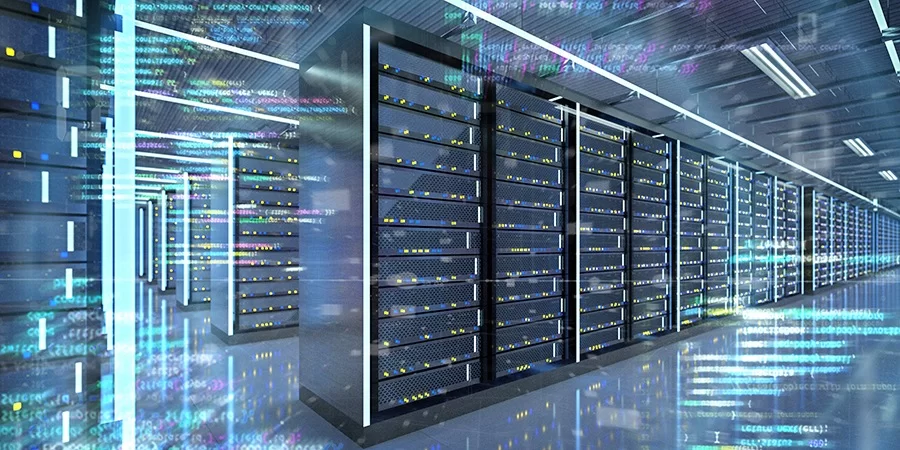
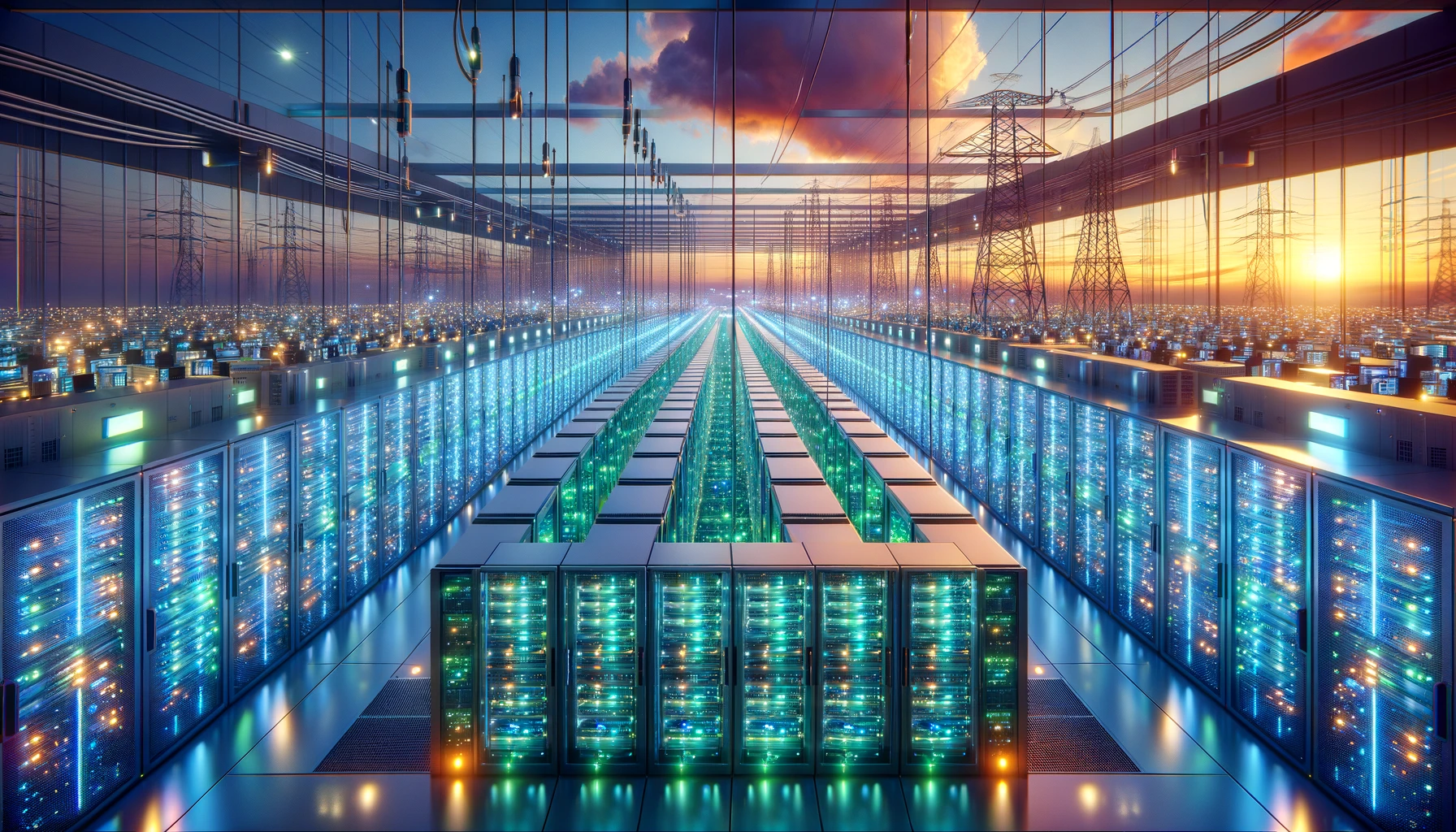
The rapid development of artificial intelligence (AI) is driving significant changes across the global data center industry. Whereas data centers were traditionally designed primarily for data storage, enterprise application hosting, and cloud computing services, the emergence of large-scale AI models is driving demand for high-performance computing infrastructure, higher power density, and advanced cooling systems.
In Vietnam, this trend is creating new investment opportunities in the AI data center segment while introducing new requirements for site selection, power capacity planning, technical design, and project development.
How is AI transforming data center infrastructure, and what should investors in Vietnam do to prepare for this trend?
1. From Traditional Data Centers to AI Computing Infrastructure
Traditional data centers have primarily been developed to meet the data storage, processing, and transmission needs of enterprises, digital platforms, and cloud service providers. Their computing infrastructure typically relies on central processing units (CPUs), with relatively stable power density and air-cooling systems.
However, the development of Generative AI, Large Language Models (LLMs), and High-Performance Computing (HPC) is significantly changing this operating model. AI workloads, particularly AI model training, require the execution of enormous volumes of parallel computations. Consequently, AI servers typically use graphics processing units (GPUs) or specialized computing accelerators connected into high-performance computing clusters. Compared with traditional server systems, GPU clusters can generate substantially higher power densities and heat loads, while also requiring high-speed, low-latency network connectivity. This is driving the development of two infrastructure models: AI-ready data centers and AI data centers, in which power, cooling, network connectivity, and scalability are designed to accommodate the specific requirements of AI workloads.
However, not all data centers supporting AI applications need to be built to the same specifications. Infrastructure requirements can vary significantly depending on whether the facility supports AI model training, AI inference, cloud computing, or traditional colocation services.
2. High Power Density Is Reshaping Data Center Design
One of the most visible changes driven by AI is the increase in electrical power density per rack. In traditional data centers, a rack density of approximately 5–6 kW has often been considered sufficient. By contrast, as demand for AI computing increases, high-density racks can now reach 30–50 kW or even higher in certain specialized configurations, placing significant pressure on power and cooling infrastructure.
AI is compelling operators to redesign data centers, from power supply systems and cooling technologies to the overall capacity to support high-density computing. Key considerations include:
First, power supply systems must accommodate higher concentrations of electrical loads. Components such as transformers, uninterruptible power supply (UPS) systems, power distribution units (PDUs), busways, and electrical distribution systems must be appropriately sized to meet rack power density requirements, redundancy targets, and the load characteristics of GPU clusters.
Second, technical space planning must be adjusted. Rack layouts, electrical cabling, cooling pipework, floor structures, and maintenance access areas must accommodate equipment with higher power densities and greater weight.
Third, scalability must be incorporated into the initial design. A data center developed for traditional cloud computing workloads may face significant limitations when converted to AI workloads if its power and cooling systems have not been adequately provisioned.
For data center projects in Vietnam, this means that power capacity assessments should not be limited to the project's total capacity in MW. They should also consider the ability to distribute power to individual IT areas and GPU clusters at the rack level.
3. Cooling Technologies Are Evolving
Increasing power density creates a major technical challenge: managing the heat generated by AI server systems. In traditional data centers, air cooling is widely used through precision air-conditioning systems, hot- and cold-aisle management, and cooling efficiency optimization solutions.
However, as GPU cluster power density increases, air-cooling solutions may encounter limitations in heat transfer efficiency and their ability to maintain operating temperatures. Consequently, liquid cooling is emerging as an important development direction for AI data center infrastructure.
Notable liquid-cooling solutions include direct-to-chip cooling, in which coolant is delivered directly to major heat-generating components such as CPUs and GPUs, and immersion cooling, in which equipment is submerged in a specialized dielectric fluid.
Compared with air cooling, liquid cooling can transfer heat more efficiently from high-density heat sources. However, implementation requires appropriate piping systems, coolant distribution equipment, leak detection and control measures, and maintenance procedures. The adoption of liquid cooling does not necessarily eliminate the need for air cooling, as other components within the facility may still require air-based cooling. The appropriate solution should be selected based on rack power density, equipment configuration, climatic conditions, water availability, and total capital and operating costs.
In Vietnam, where the tropical climate is characterized by high temperatures and humidity, cooling technology selection is particularly important to the energy efficiency of data center operations.
4. Opportunities and Challenges for Vietnam's Data Center Market
AI development creates opportunities for Vietnam to participate more deeply in the regional digital infrastructure value chain, particularly as demand for computing capacity, data storage, and cloud services continues to expand.
With its strategic location in Southeast Asia, a growing digital economy, and increasing demand for enterprise digital transformation, Vietnam has favorable conditions for attracting investment in data center infrastructure. However, translating this market potential into viable AI data center projects requires addressing several key challenges.
First, access to power and electricity pricing mechanisms. Large-scale projects require clearly defined power supply arrangements and expansion roadmaps that align with local electricity infrastructure development plans. In addition, determining the applicable electricity tariff for data centers remains a challenge, as the pricing framework for these facilities is not yet clearly established and remains subject to differing interpretations. For projects with substantial and continuous electricity demand, electricity price fluctuations and access to direct power purchase agreement (DPPA) mechanisms can significantly affect operating cost forecasts, financial modeling, and long-term investment returns.
Second, technical infrastructure readiness. Not every site or existing data center can be readily upgraded to accommodate the power density and cooling requirements of AI systems.
Third, project implementation and operational capabilities. AI data centers require close coordination among project developers, design consultants, equipment suppliers, mechanical, electrical, and plumbing (MEP) contractors, and operators with experience in high-performance computing infrastructure.
Fourth, commercial viability. Growing AI demand does not automatically mean that every AI data center project will achieve its expected investment returns. Investors must clearly identify target customer segments, business models, actual capacity demand, and the potential to secure long-term contracts.
In addition, investment, construction, environmental, telecommunications, information security, and data protection requirements must be reviewed in accordance with each project's scope of activities and technical characteristics. Although Vietnam has established technical standards and regulations for conventional data centers, the development of AI infrastructure is introducing new requirements and exposing gaps in the existing regulatory framework. A key challenge is ensuring consistency between sector-specific regulations governing data center infrastructure and the legal framework governing artificial intelligence.
AI is progressively transforming how data centers are planned, designed, constructed, and operated. From power systems and cooling technologies to network connectivity and financial models, these evolving requirements are making AI data center development an increasingly complex technical and investment undertaking. For investors in Vietnam, the opportunity lies not only in adding data center capacity, but also in developing infrastructure that meets AI computing requirements, supports future expansion, and maintains operational efficiency over the long term. In this context, assessing project feasibility from the earliest investment stage is essential to mitigating risks associated with site selection, power availability, infrastructure design, and project development costs.
DCOMPASS, as an investment advisory and data center project development consultancy in Vietnam, supports investors in entering the market through a comprehensive range of services, including investment advisory, legal and licensing support, site selection, infrastructure assessment, project development, and market intelligence. Through our local partner ecosystem and professional advisory capabilities, DCOMPASS aims to connect investment opportunities with practical implementation requirements, helping investors assess project readiness and develop data center infrastructure strategies aligned with the evolving demands of AI.
References:
[1] VnEconomy (2026), “Vietnam's Data Center Industry Faces Green Infrastructure Pressures Amid Rising AI Demand,” https://vneconomy.vn/techconnect/trung-tam-du-lieu-viet-nam-truoc-ap-luc-xanh-va-nhu-cau-ai-tang-cao.htm
[2] Lohith Karunakara Malige (2024), “The Impact of Artificial Intelligence on the Modern Data Center Industry,” https://www.researchgate.net/publication/383232173_The_Impact_of_Artificial_Intelligence_on_the_Modern_Data_Center_Industry
[3] TeleGeography (2026), “AI's Impact on Data Center Deployments and Operations,” https://resources.telegeography.com/ais-impact-on-data-center-deployments-and-operations